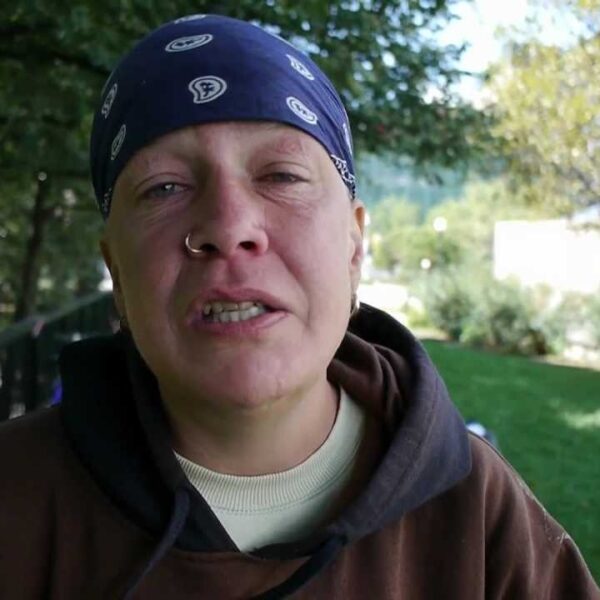


How Barriers to Oral Healthcare Are Killing Homeless People
“Can you imagine being unhoused, you just finished a round of chemo, and you have to sleep on the sidewalk tonight? This is the exact scenario our patients go through. I’ll never forget how one of the patients described the feeling. He said he couldn’t tell if the ants on the sidewalk were biting him, or if that was how the chemo made his skin feel.”
— Dr. Jessica Pharar of the Pharar Foundation describes the unsettling intersection between homelessness and subpar oral health access.
Smile: Your Livelihood Depends on It
Our smiles carry a heavy weight we might not be aware of. Our teeth introduce us to the world. In fact, before we even utter a word, our mouths communicate a great deal to our peers about where we rank socially, how hygienic we are, and how responsible, approachable, friendly, and capable we are.
A 2020 scoping review published by the British Dental Journal examined 16 studies on dental appearance and employment and concluded that visible dental deformities can negatively influence employment-related decisions, hence making people with poor oral healthcare appear to exhibit fewer hireable traits.
Further research confirms that tooth color is a characteristic most people use to assess one’s level of:
- Intelligence
- Friendliness
- Attractiveness
- Popularity
- And general potential for success
Whiter smiles rank higher on the social status ladder, while darker teeth are associated with lower perceptions of status.
In short, access to oral healthcare or the lack thereof can play a pivotal role in things like housing, hiring, and social inclusion. Unfortunately, the people who are already most vulnerable to instability in those areas are also the least likely to have access to adequate dental healthcare.
But like the enamel on the top row of teeth, this is really just the visible surface we see. Over a longer period of time, this lack of access to oral healthcare can be the difference between life and death, not just a distinction in hireability or the perception of someone’s social standing.
Oral Health is a Gateway into Physical Wellness: Understanding the Connection Between the Smile and the Heart
A sizable and growing volume of evidence now links poor oral health to chronic disease. This is particularly true in the case of periodontitis, which, when present, is associated with a 19-26% higher incidence rate in type 2 diabetes and a 31% higher risk of developing cardiovascular disease.
To better understand the challenges homeless people face in accessing oral care, we spoke with Dr. Jessica Pharar of the Pharar Foundation. She went to dental school in Las Vegas in a low-income area where she was first introduced to dentistry for unsheltered patients. Since then, she has worked in an outreach clinic that treats victims of domestic abuse.
Her practice has a charitable arm that provides care pro bono for cancer patients who cannot afford it otherwise. They specifically have homeless patients who qualify for that program.
“Oral health is a ‘silent epidemic’ among homeless populations,” said Dr. Pharar. “These patients often have limited access to care. They are pre-judged by providers and don’t receive the care and dignity they deserve.”
“Your oral health is not just about teeth,” Dr. Pharar continued. “It’s the gatekeeper to nearly every other part of your life. Barriers to care for the homeless population fall into three areas: cost of services, discrimination from providers, and the anxiety or competing survival priorities that come with living unhoused.”
“People experiencing homelessness have the least access to health services in general. Without money, insurance, and a permanent address, many providers are often unwilling to treat them — and the visible stigma of an unhealthy mouth becomes its own barrier to seeking care,” Dr. Pharar said.
“That visibility carries real consequences: a damaged smile undermines confidence in job interviews and social interactions. Chronic pain and infections make it hard to eat, sleep, or concentrate on the tasks of finding stable work,” she continued. “Poor oral health erodes quality of life even though it’s one of many overlapping hardships homeless people face.”
Homelessness and Oral Cancer: An Underreported Crisis
Perhaps more disturbing still is the sheer number of homeless people dying on the streets from squamous cell carcinomas, more commonly known as oral cancer. According to ecancer data, “Cancer is twice as likely to affect people experiencing homelessness (PEH) as members of the housed population.”
Dr. Pharar attributes much of this disease prevalence to delays in cancer screening, a barrier she says is posed by the cost. During her time in dental school, she witnessed homeless oral cancer patients milling around near the hospital in pain after their treatments because they had no place else to go. This was a gut-wrenching visual that prompted her to start the pro bono arm in her dental business, where she regularly comes into contact with homeless oral cancer patients.
“You definitely see more severe disease, or more progressed disease, in the unhoused population because access is so hard for them,” said Pharar.
“When I did a residency in Texas, and we would cover the emergency clinic on the holidays, we would see a lot of unhoused patients who got discharged from the hospital. They would come over because they would try to use the emergency room if they had a problem. But if it’s a dental problem, emergency rooms usually aren’t equipped to manage them unless they have a dental emergency component. So, a lot of times, they’d come get antibiotics and then get sent over to a dentist or a dental office.”
Forced Relocation Is a Barrier to Care
“Unhoused cancer patients face unfathomable barriers to care because there’s not a reliable way to get in touch or follow up with them,” Dr. Pharar said. “Sustainable progress before we had the pro bono practice was nearly impossible. A lot of times, the action had to be one-and-done.”
“You had to complete everything at the appointment knowing they might not get another one,” she continued. “If you wrote them a prescription, there was no way to guarantee that they could fill it. Did they have access to a pharmacy? Could they afford the medicine? It’s very difficult to know the answer to these pressing questions when your patients keep being forced to relocate.”
Dr. Pharar detailed one specific homeless oral cancer patient who was difficult to pin down or even find. He lived in the area and could sometimes be seen in unexpected places like the gym or the grocery store, but follow-up appointment schedules proved daunting as he was constantly moving around.
This is one of the many adverse aftereffects of sweeping homeless encampments. It often leaves homeless patients and their doctors in dire straits. Follow-up appointments are that much more difficult when patients are forced to constantly relocate due to anti-camping ordinances. This dilemma, when combined with the fact that they are often diagnosed during later stages of the disease, can prove life-threatening.
“In general, oral cancer is diagnosed pretty late, but in particular, we see late diagnoses in the unhoused communities because the way we screen for it is when you come in for your preventative care,” Dr. Pharar said. “If you’re unsheltered, and you’re not getting that preventative care, the oral cancer gets caught very late, and then the treatment has to be much more aggressive for a good quality of life. There’s a much bigger drop in the quality of life for unhoused patients.”
Challenges Accessing Chemotherapy and Other Cancer Treatments Abound
According to Dr. Pharar, a lot of unsheltered patients don’t have access to things like chemotherapy and aftercare because you need to be in a shelter or transitional living space to obtain those resources. This means that street homelessness poses even more of an obstacle than sheltered or hidden homelessness in respect to the quality of life with oral cancer.
Sweeps again exacerbate the issue by making it difficult to maintain and store cancer medication. When police officers with bulldozers are on standby waiting to plow over your makeshift shelter, life-saving medications don’t usually last, and refilling prescriptions after encampment sweeps is nearly impossible to accomplish.
Homeless Oral Cancer Patients Are Hardworking People Who Fell Upon Hard Times
“The thing that has utterly blown me away, and perhaps been the most eye-opening thing I’ve noticed about these homeless cancer patients, is learning how they became unhoused,” Dr. Pharar exclaimed.
“Two of my most memorable patients were both college graduates. One of them used to work in the nonprofit sector, and even still wanted to help us with our nonprofit. And I was like, How did you end up here then, when you’re so ambitious and educated? He told me his story, and it sounded like it wasn’t this big catastrophic thing,” she said. “He didn’t have an addiction. He wasn’t a gambler or a criminal. It was just like a couple bad breaks, and he ended up homeless on the streets with oral cancer, you know?”
Homelessness can happen to anyone. Cancer will happen to nearly half the people in the United States, and to one in five people worldwide.
Talk to Your Legislators About Affordable Housing for All
Nobody should be writhing in agony on a street corner, dying while homeless with oral cancer in one of the wealthiest countries in history. Tell your legislators to start drafting laws that represent the best interests of the people they claim to represent by making housing an irrevocable human right for all.